|
Hi !
Today I'm kicking off a new series for this newsletter, in which I interview artists who work in multiple contexts, or people who have made a big switch in their work. I want to find out how working artists really manage creative life, from keeping the bills paid, to Doing All the Things All the Time-- not just their art, but the day jobs, side hustles, and all the requisite admin and self-promotion that few of us love, but we all have to do. |
| |
|
Interview with a deer. A pun, as you shall soon discover. |
| |
|
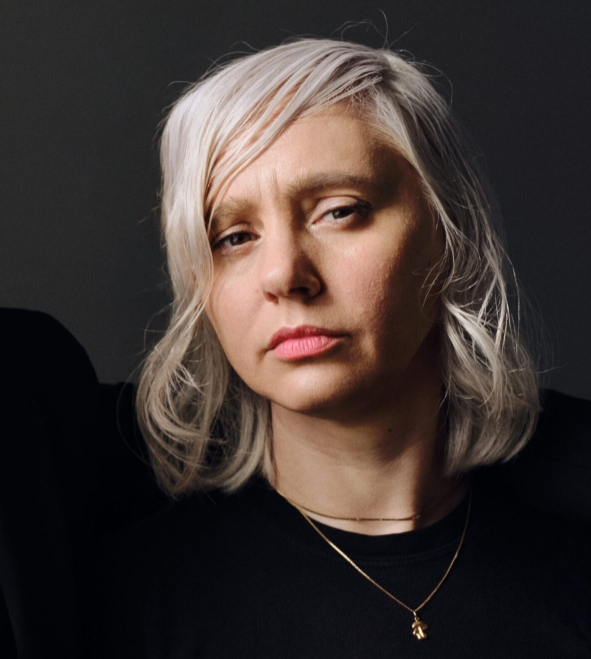
My first guest is Natalia Yanchak, a writer, musician, game developer, and arts administrator, based in Montreal. News, updates, and links I think you might like follow the interview. |
| |
A Million Things at Once: Interview with The Dears' Natalia Yanchak |
| |
|
“After 15 years of renouncing it, I started writing again. I was like, I'm gonna write a book before I turn 40.”
Over a video chat, Natalia Yanchak is describing her looping path, from a degree in English and writing, to co-founding rock band The Dears, back to writing, and then finally into games.
It's late January, 2026, and The Dears are going strong. Their latest album, Life Is Beautiful! Life Is Beautiful! Life Is Beautiful! just dropped, and Yanchak is getting ready to head out on a European tour.
I tell her I'll do my best to get this interview out in February, while the tour's still on, grossly underestimating my winter workload, and the effort required to produce a newsletter. |
| |
"Oh no. Right. I need to promote myself."
My schedule is light compared to Natalia's. Along with The Dears, parenting, and a day job as the operations director for Goose Byte Games, Yanchak is board president for Pop Montreal, and still finds time to write and create self-directed game projects under the Ting Dun Productions banner. She's recently relaunched her newsletter, covering this full array of interets. In a statement I relate to with my whole being, she says it's hard to keep the newsletter going sometimes.
"It tries to die... and then I'm like, 'oh no. Right. I need to promote myself."
“I stopped writing, completely.”
Yanchak has been grappling with the demands of self-promotion since Y2K, when she graduated from Concordia University with a degree in creative writing, and promptly co-founded a rock band. Although she says she learned a lot at school, the drain of writing for grades left her burned out.
“I thought, I'm not gonna write anymore. I'm gonna go be in this rock band because I'm sooo cool. I stopped writing, completely.”
“You haven't sold out yet? What are you waiting for?”
Undeniable cool notwithstanding, experience has taught Yanchak that it's the boring details of business that make a band sustainable.
"I was like yeah, I'm never going to sell out."
But as the decades rocked on, the industry changed, and influencer culture emerged.
"Today, it's more like, you haven't sold out yet? What are you waiting for?"
Bands today face mounting expectations to self-promote and self-produce. But to Yanchak’s view, industry respect for musicians hasn't kept pace with the escalating demands on their time and energy.
“The idea that music executives have,” she says, “is that you're making art, and you shouldn't know anything about your product." But, “the musicians are actually the most powerful people in the entertainment equation… the creators, the people with the ideas and the IPs."
I'm surprised. Haven't there always been indie musicians who had to be sharp about businesses? What about high profile examples like Taylor Swift, who's as famous for taking back control of her catalogue as she is for her pop?
Yanchak says this proves her point.
"She came up through a system that didn't value her business skills. We had to come to a point where she was like, I'm a powerful businesswoman, and I want to control my IP. That transformation happened."
"You can't fuck around."
Taking independent control can feel overwhelming, but Yanchak argues the alternative is riskier.
"There's tons of articles in my news feed, that are like, “we just got back from two months on an arena tour and we're $30,000 in debt. That's super real. You can't fuck around."
The Dears are not fucking around. They have an expansive catalogue that generates "passive income," which helps maintain a series of business systems ranging from insurance to accounting. They've just hired a bookkeeper, which almost magically frees up energy to make music, and plot their next business moves.
"It's like a dream." |
| |
|
Perhaps it’s the waking dream of someone else managing the spreadsheets that frees Yanchak to think about other things. A lot of other things.
After almost two decades of not-writing, in the 20-teens, she felt the urge to write returning— but not for literary fiction.
“The rules are out the window.”
"I was like, I'm gonna write again, but I'm gonna only write science and speculative fiction, because the rules are like, out the window. There's so much more freedom to just invent stuff. I don't have to deal with reality."
She wrote a novella, and then published several stories. You can find her science fiction work on Wattpad, and Amazon, and she’s also dipped a toe into literary criticism, and games journalism.
But how did she make the leap to videogames?
"I can make a website, so I can use Twine"
Like so many game writers, it was discovering html-based branching-narrative tool, Twine, that first opened her eyes to the possibility of writing for games.
“I thought, I can make a website, so I can use Twine. Let's see what happens.”
Where her story forks sharply from that of countless other Twine beginners, is that she immediately applied her business lens to her early experiments.
“I applied for a grant through Canada Council, which I got, and finished a really fast game. Then I took the bulk of that money and put it into Riley and Rochelle.” |
| |
|
Developed with Owlskip Games, Riley and Rochelle is a nostalgic game, informed by Yanchak’s experience with the music industry, and her ethos as an artist. Set in the ‘90s, it follows the lives of two musicians “from different sides of the tracks,” as they find their voices, and then fame, all while falling in and out of love. Players fill in the dates in their journals to build their own picture of who Riley and Rochelle really are, to make a documentary about the pair.
This year, Yanchak is again embarking on an exploratory new game project that combines music and interactivity. |
| |
"As soon as you're in the door... you know you're making a product."
Natalia says that in videogames as in music, there's an imbalanced dynamic between creators and funders, but "the opportunity is very different."
In games, "as soon as you're in the door, if you're a creator, you know you're making a product that you have to sell to people. Music is more intangible and ephemeral."
If musicians perform, and through performance, hope to find an audience, the audience for games arrives with expectations. "It's like, I want a turn-based RPG, and I want it now. Gimme.”
And the phenomenon of ending a tour deep in debt has its own mirror in games, too.
"This is the part that's blowing my mind... hearing about studios that are like, 'well, we didn't put it out and our publisher dropped us. We spent three quarters of a million dollars, and I got nothing to show for it. And we're just gonna move on to the next thing.'" |
| |
“You just… keep on.”
I want to know how Natalia balances recording an album and going on tour, while also developing a solo game, working, remembering to self-promote, and keep up with board-member responsibilities. How is there time?
“Oh, right now, there's not,” she says. I find this reassuring.
“I'm lucky that I have the luxury of having a job where I can just take my vacation time. That's like the financial security blanket.”
“Touring is very special, because it's really hard to think about anything else and to focus on anything else, because you're always traveling. You're always moving. You're always waiting. There's a lot of hurry up and wait. Like, oh, I gotta wait for the stage to be set up before I can set up my stuff, so I'm just gonna sit here for an hour, and it's not enough time for me to think about other work.
“We have a tour manager. I just have to, like, turn up and look presentable to other people. It's still tiring, but I'd rather be doing that than a desk job. But touring is not very profitable. So you just… keep on.” |
| |
"Things are never gonna stop changing."
Everything comes together, to build Yanchak’s personal idea of success.
“I guess at one point I'd have been like: success would be fame and glory or something. But now I'm like, what is success?”
“As a peri-menopausal woman, my body's changing, fast and furious… And it's not gonna stop happening. Things are never gonna stop changing."
"Success is taking care of my body and being healthy and maintaining mobility for the next 40 years, and not being stressed out, and having a certain level of comfort and being able to take care of the people around me, and, give them what they need.”
“Success for me would be to have a level of comfort where I don't have to grind super hard to maintain that comfort.“ |
| |
|
Thank you so much for sharing your insights and career's journey with us, Natalia!
Now, the regular newsletter stuff: |
| |
|
In early June, I'll be heading back to the University of King's College for a weeklong residency to kick off the second and final year of my MFA in Creative Nonfiction, and I plan to share some of my experience, in my next newsletter. |
| |
|
Fall Workshops in Montreal |
| |
|
This fall, I'll be leading an 8-week workshop in Writing for Games and Interactive Storytelling, for the Quebec Writers' Federation. If you want to join the QWF (which I wholeheartedly recommend, they even have PWYC and "friends" tiers of membership), you can receive their members' newsletter, and find out directly when their workshops are announced, and also receive some tons of info about upcoming submission calls and writing events. |
| |
|
I've been working with Peculiar Path Productions on Reply All, a card battler game in which email is combat. I've been designing narrative systems that let you play cards to send passive-aggressive emails, like your worst 1990's worksona. If you'd like to help the game out for free, you can wishlist Reply All on Steam. |
| |
Reading, Listening, Watching, Playing, Posting |
| |
|
I saw Blue Heron at Cinema Moderne, with a Q&A with its director, Sophy Romvari, and it blew me away. It blends memoir, fiction and documentary, picking and choosing whichever tools serve the story, inspired by Romvari's childhood, growing up as a younger sibling of a troubled older brother. And it pulls off an incredible trick with time and perspective. |
| |
Reading: I Hope This Finds You Well by Natalie Sue |
| |
|
I very much enjoyed Natalie Sue's bittersweet office comedy about "an admin worker accidentally gains access to her colleagues’ private emails and DMs and decides to use this intel to save her job." It has an intensely difficult protagonist, but the book has so much heart that accompanying her on this reluctantly transformative journey felt like a real privilege. |
| |
|
Every Tuesday on Bluesky, I post a freshly-registered tartan from the Scottish Register of Tartans. A recent highlight was this one: for CheeseIts. Yes, the snack food. Follow me there for more unusual tartans. |
| |
|
That's all for today.
Thanks for reading!
- Jill >-[}
PS: Is there anything (or anyone) you'd like to see in a future newsletter? Please reply and let me know! |
| |
|
Designed and written by Jill, using human hands, knowledge, effort, and mistakes. |
| |
|